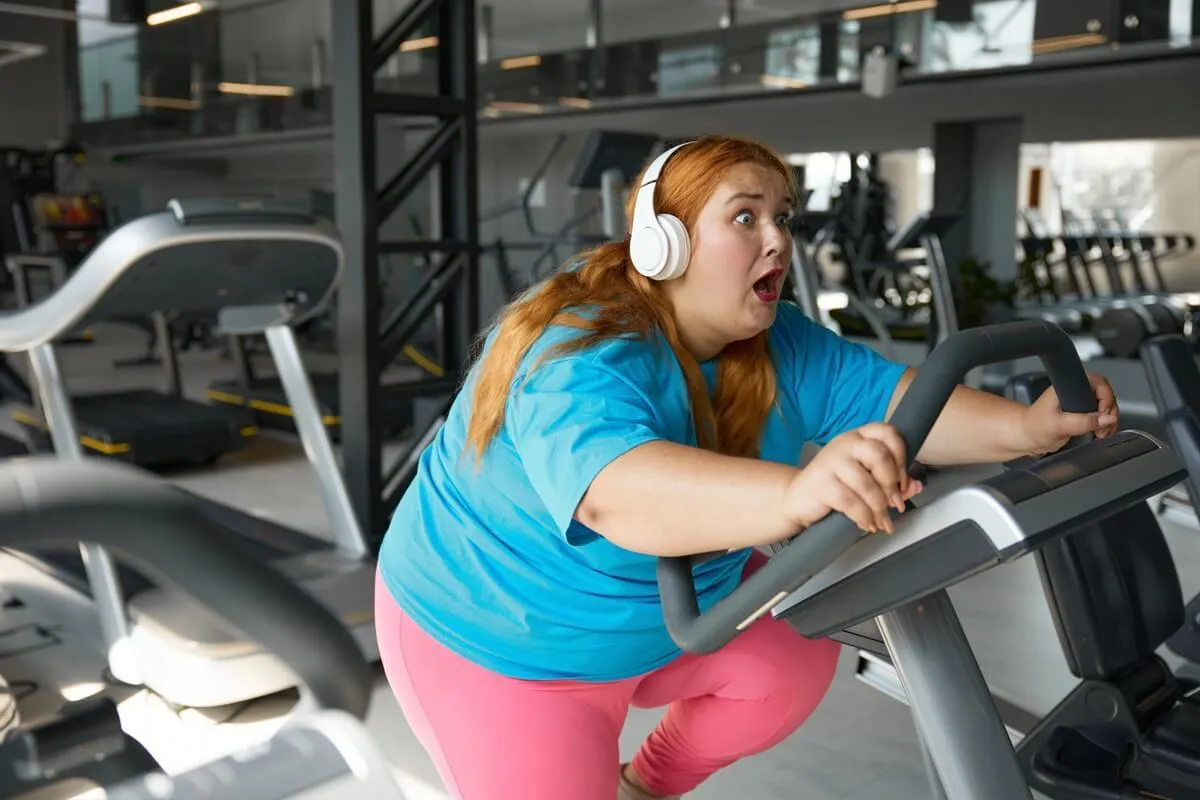
Working Out And Eating Healthy But Not Losing Weight
Why You're Not Losing Weight Despite Exercising?
You’ve been going to the gym, getting your workouts in, and trying to eat healthy—but fail to lose fat as the number on the scale barely moves. It is quite annoying if you’re not losing weight despite exercising, you may be wondering whether your workouts are working at all.
The good news is that exercise is still valuable. The problem may be with your workout approach that needs adjustment.
Weight management isn’t only about burning calories during a workout, it is more than that. Your food intake, daily activity, sleep, stress, exercise routine, and other individual factors can all influence your progress. (CDC)
Exercising But Not Losing Weight? Look Beyond Your Workout
Over-eating is one of the most common reasons people are exercising but not losing weight. They simply don’t realize how much they are eating.
A workout may burn calories, but it is surprisingly easy to replace those calories through larger portions, snacks, sugary drinks, restaurant meals, or weekend eating.
For instance, Monday through Friday, you may workout regularly but you do over-eating on Saturday and Sunday. It isn’t just about what happens during your workout but also your weekly calorie balance.
According to CDC weight-loss guidelines, It is recommended combining regular physical activity with healthy eating patterns, adequate sleep, and stress management.
Why Am I Not Losing Weight?
If you're asking, “why am I not losing weight?” Start by looking at the broader picture.
Consider these questions:
Are your eating portions larger than you realize?
Are you taking calories through soda, alcohol, specialty coffees, or juice?
Are you snacking more because exercise increases your appetite?
Are you exercising consistently throughout the week?
Are you sleeping enough?
Has your daily movement outside the gym decreased?
Have you been following the same workout for months without any progress?
Another issue is that the scale doesn't tell the whole story. If you're doing strength training, you may gain or preserve muscle while losing body fat. Your waist measurement, clothing fit, strength, and progress photos can provide additional information and show the difference.
Working Out But Not Losing Weight? Check Your Diet
If you're working out but not losing weight, don't automatically assume that you need more exercise.
Healthy foods can contain significant amount of calories. Nuts, oils, avocado, whole grains, smoothies, even larger portions of other nutritious foods can quickly add up.
It isn't important to eat as little as possible. Instead, the goal should be to build an eating pattern you can maintain while creating an appropriate calorie deficit. NIDDK recommends a sustainable healthy eating plan that includes fruits, vegetables, whole grains and appropriate protein sources. (NIDDK)
Tracking your food for several days can be useful because it can reveal patterns you might otherwise overlook.
Not Losing Belly Fat Despite Exercise?
A common question people ask from their fitness coaches is: “Why am I not losing belly fat despite exercise?”
Unfortunately, you can't choose exactly where your body loses fat first. Doing hundreds of crunches won't specifically force your body to burn abdominal fat.
Instead, focus on reducing overall body fat while building and maintaining muscle.
A combination of cardiovascular activity, resistance training, nutritious diet choices, and consistent habits can help you make progress. You may also reduce your abdominal fat as your overall body fat decreases.
Don't Ignore Your Daily Activity
Sometimes failing to lose weight despite exercising has less to do with the workout itself and more to do with what happens afterward.
Walking more, taking the stairs, standing regularly and staying generally active throughout the day can complement your structured workouts.
For example, you may complete a 30-40 minute workout but for the rest of the day, you spend your time sitting at a desk or on the couch. You may also unconsciously move less because you feel tired after exercising. This can reduce your overall daily calorie expenditure and make it harder to achieve the fat-loss results you want.
Adults are generally advised to get at least 150 minutes of moderate-intensity aerobic activity per week along with muscle-strengthening activities on at least two days. (CDC)
Your Program May Need a Change
If you've been exercising and not losing weight for several weeks, look at whether your training program is actually progressing.
Your body adapts to repeated exercise. A good personal training program may gradually adjust exercises, resistance, repetitions, intensity, cardiovascular work, and recovery according to your goals.
More exercise isn't always better. The objective is to create a sustainable training and nutrition strategy—not to exhaust yourself every day.
Be Patient With the Process
If you are not losing weight after exercise, it doesn't necessarily mean your struggle to lose fat is wasted.
Due to changes in water, food volume, sodium intake, and other factors, your weight can fluctuate. That's why looking at trends over time is more useful than reacting to one day's weigh-in.
Healthy weight loss is generally gradual. The CDC notes that people who lose weight at a steady pace are more likely to maintain as compared to those pursuing rapid weight loss. (CDC)
It's Time to Become More Specific
If you're failed to lose weight despite all the efforts, it's time to become more specific.
It is important to ask yourself whether your food intake is aligned with your fat loss goal instead of simply assuming whether you're “eating healthy”.
You may need to examine protein intake, snacks, portion sizes, beverages, meal timing, and weekend habits. Sleep and stress also deserve consideration because weight management isn't determined by exercise alone. (NIDDK)
If you notice an unexpected change in weight or you're concerned that a medication or medical condition could be affecting your weight, speak with your healthcare professional. The CDC notes that medications, medical conditions, hormones, genes, age, and stress can all influence weight management. (CDC)
How to Start Losing Weight Again?
So, how to start losing weight again after hitting a plateau?
Start with the fundamentals:
Track your food and drinks for several days.
Review your portion sizes.
Prioritize protein-rich, nutrient-dense foods.
Continue strength training.
Perform regular cardiovascular activity & walking.
Monitor your sleep and stress.
Track your weight trend rather than individual weigh-ins.
Adjust your plan based on your actual progress.
If you're doing all of this but still struggling, personalized guidance can make the process much easier.
At Thurston Personal Training in North Phoenix, Master Trainer Seth Thurston & his professional personal training team can help you identify what's holding back your progress and build a fitness training approach around your individual goals, fitness level, and lifestyle.
The goal isn't simply to work harder. It's to make sure the work you're doing is moving you in the right direction.